Are we over treating patients with corticosteroids ?

Corticosteroids have been widely used as an anti-inflammatory agent to treat symptoms in a variety of diseases like COPD, asthma, allergies, fungal dermatitis and the list is never ending.

The fact that corticoids provide quick relief make us think that they’re the “wonder drug”, sort of like the jack of all trades for every condition. But we often overlook the fact that they’re basically like double edged swords. They mostly treat symptoms, not diseases, except a few rare conditions that result from corticoid deficiency.

My experience with corticoids began early in life as I have a history of allergies since childhood. Back in the day and even now I see physicians prescribing corticosteroid combination ointments for conditions like fungal dermatitis. The only thing I’ve noted is that they work well for the first few days and then once the patient stops using them, the infection returns, but now the spread seems more aggressive.

This causes frustration and the patient ends up using more of the ointment and this leads to a chronic resistant type of fungal infection, and the patient becomes dependent on steroids to control the condition. This overuse of steroids also leads to adverse effects such as stretch marks, darkening of skin etc.

Overuse of inhaled corticosteroids can lead to opportunistic infections such as candida and aspergillus and systemic corticoids have been known to cause hyperglycemia and Cushing-like symptoms, the features we commonly see in Cushing’s syndrome.

A recent example of corticosteroid abuse has been the COVID-19 pandemic. Corticoids have been used extensively even when it has only been indicated for patients requiring oxygen therapy or ventilator support. This rampant use of corticoids has lead to opportunistic infections, most commonly being mucormycosis. The image below clearly shows the pitfalls behind corticoid use.
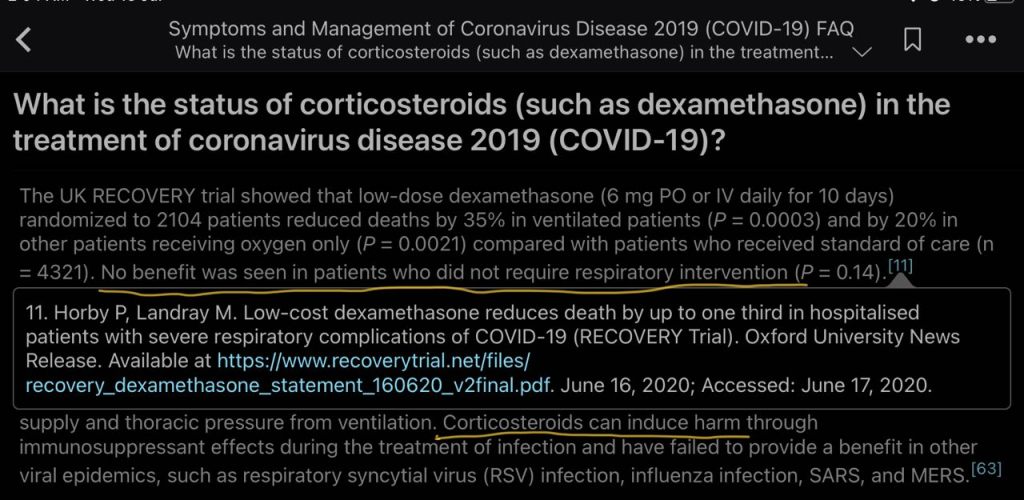
While corticoids have proven to be beneficial in conditions like COPD or Asthma requiring beta agonists such as SABA or LABA, and in patients with COVID-19 requiring ventilatory support, I believe we should clearly limit the use of this class of drugs for reserved cases only, where a clear benefit has been established.

What’s your take on this situation? Do you think corticoids have been used judiciously or do we need changes to our approach towards using them?
Disclaimer

Doctor-Patient Relationship, Lets Talk!

Gone are those days when being a doctor was considered noble and doctor patient relation considered sacred.

These days doctors and nurses have to face more lawsuits, insults, assaults and at times even mob violence. The present generation of care seekers seem to be much more intolerant than ever before. As people are getting used to a comfortable and instantaneous lifestyle, similar expectations remain when people approach a healthcare centre.

Many view healthcare as plain business and a money eating machine than a noble service provider, and to an extent they’re not wrong in thinking so. But the acts of a few seems to have represented the acts of the many and there’s a lack of understanding about the amount of work and money it takes to run a hospital and carry out procedures.

There seems to be a definite lack of empathy when it comes to people seeking treatment. What could be the reasons behind the angry mob culture in hospitals these days?

Patients and their attendants complain of lack of understanding and empathy from medical staff. To some extent that could be true but is it really the cause?

One reason for sure is the worsening doctor-patient ratio. The amount of people seeking medical care seems to be much higher than what the medical staff can handle leading to impatience, chaos and disharmony. Will creating more medical colleges solve the issue? Probably, but this will dilute the medical profession and might lead to unhealthy competition among medical fraternity.

By allowing this to happen, we are just leaving the doctors to find patients on their own. Patients will have more options to choose from and won’t mind attacking a doctor or two, “as there’s always another one available nearby”. This leads to doctors being the scapegoats of the system. This instead of solving the problem might end up making it worse.

This might also lead to unhealthy practices amongst doctors, as every physician will need his/her bread and butter. If a person has toiled hard and sacrificed his/her childhood and prime years of his/her life to become a physician, don’t you think he/she deserves a fair chance in the system to grow? Without this opportunity might come frustration and depression. This might disturb the noble ideals and values, in a society where a physician doesn’t feel respected. What you give is what you get after all.

Simply expecting a healthcare provider to selflessly serve is ignorance. They are humans after all. Will the society give free food and electricity to these physicians? I don’t think so. They need to be treated like humans, as they are just like you or me who have simply decided to work hard on his/her dreams to serve the society.

Then what do we do? Another approach is to upgrade existing health infrastructure, make latest drugs available at primary healthcare level and improve support staff. Capacity expansion seems like a logical approach. Have we done enough in this regard? Can we do more?

How is the healthcare infrastructure in your town or city? Do you think what’s available is good enough to support the existing population?

A Nation-Wide DICOM Network

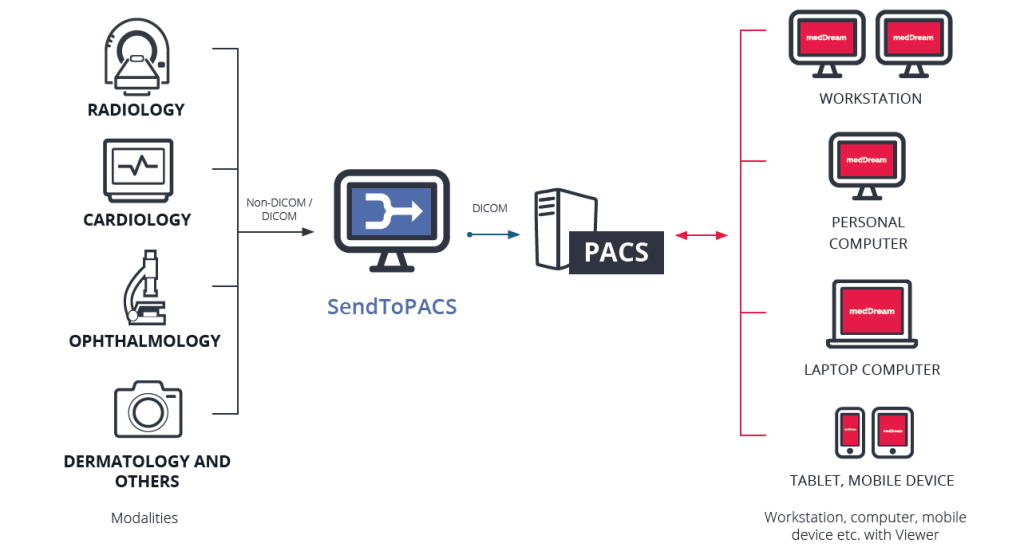
Digital Imaging and Communications in Medicine (DICOM) is the standard for the communication and management of medical imaging information and related data. DICOM is most commonly used for storing and transmitting medical images enabling the integration of medical imaging devices such as scanners, servers, workstations, printers, network hardware, and picture archiving and communication systems (PACS) from multiple manufacturers. It has been widely adopted by hospitals and is making inroads into smaller applications like dentists’ and doctors’ offices.

What I envision is a DICOM network that connects more than one hospital in a city, connects hospitals of more than one city, connects hospitals and clinics of an entire nation, because why not?

Imagine a world where a patient who was treated in a tertiary care centre can go to his or her local clinic and continue the treatment. All the clinic will need to do is access her profile in the nationwide DICOM network to get all the files.

If laboratories are connected to the same network, it’ll be easy to find a report when the patient needs it. One of the most common problems doctors face is incomplete past medical history. With this method, it’ll be easy to lookup the entire medical history of the patient along with laboratory or radiological reports when needed. A unique serial number is all that will be needed to achieve this.

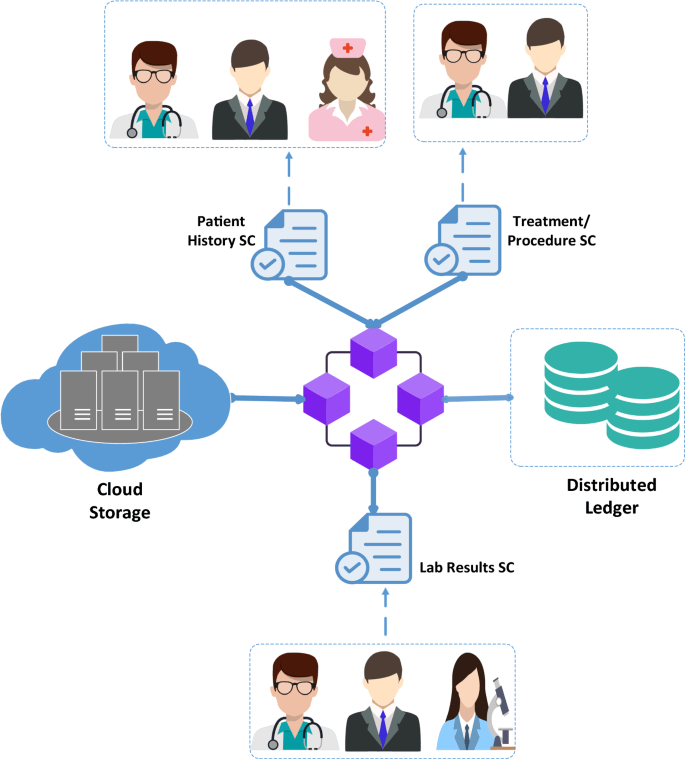
Use of block chain can also be explored. Projects such as Ethereum and Polygon can lend their chains to create a decentralised network, and Arweave for storage and retrieval of patient data. This will add speed, privacy and security. The patient will be the owner of the data and nobody else. Decentralised apps can be used for this purpose. The possibilities are endless.

Anonymous block chain data may also be used for research purposes

Let me know what you think about this in the comment section below!